Fiber basics
Resistant Starch Explained: The Starch That Feeds Your Gut Bacteria
Resistant starch is starch your body cannot digest, so it reaches the colon and feeds gut bacteria. In one trial, 3.5 g a day of potato resistant starch raised Bifidobacterium and Akkermansia in 4 weeks. A review of 22 trials found limited metabolic benefit even at 8-66 g a day. Sodatide holds 100 mg, about 3% of 3.5 g.
Written by the Sodatide editorial teamUpdated · 8 min read
The basics
What is resistant starch?
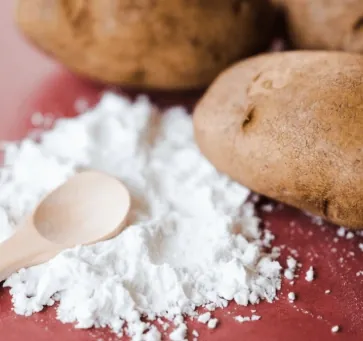
Resistant starch is starch that resists digestion. Most starch turns into sugar in your small intestine. This kind slips past and reaches the colon mostly whole.
Once there, it behaves like fiber. Gut bacteria break it down for food. That is why dietitians group it with prebiotics such as inulin.
Researchers sort resistant starch into types. Raw potato starch is type 2, often written RS2 (Snelson 2019 (resistant starch meta-analysis)). Its starch grains are packed tightly, which makes them hard for your enzymes to open.
Inside the colon
What does resistant starch do to gut bacteria?
At gram doses, it can shift which bacteria grow. The clearest test of potato resistant starch gave 75 healthy adults either 3.5 g or 7 g a day, or a placebo, for 4 weeks (Bush 2023 (resistant potato starch)).
The 3.5 g dose raised two groups of bacteria compared with placebo: Bifidobacterium and Akkermansia. Both doses were safe and well tolerated. One caution: the starch maker funded the trial.
Akkermansia is the same bacterium that gets so much attention online. Our article on what the Akkermansia studies show explains why that attention runs ahead of the data.
Beyond the gut
Does resistant starch help with weight or blood sugar?
Not much, based on the best summary we have. A review pooled 22 randomized trials with 670 people who took 8 to 66 g a day for 1 to 12 weeks (Snelson 2019 (resistant starch meta-analysis)).
| Measure | Result | Plain meaning |
|---|---|---|
| Fasting glucose | No significant change | Morning blood sugar did not move |
| HOMA-IR | No significant change | No clear change in insulin resistance |
| HbA1c | No significant change | No change in long-term blood sugar |
| Body weight | Down 1.19 kg | Driven by one trial with a high risk of bias |
| Side effects | None reported | Well tolerated at these doses |
The authors' own words: short-term RS2 supplementation in humans "is of limited cardiometabolic benefit". That verdict covers doses up to hundreds of times what a capsule holds.
Evidence, ranked
How strong is the evidence behind Sodatide's fibers?
- Inulin, in grams20 trials, 607 adults
At gram doses only LDL cholesterol fell overall; glucose showed no clear change. (Liu 2017 (inulin meta-analysis))
- Resistant starch22 trials, 670 people
At 8-66 g a day, judged of limited cardiometabolic benefit. (Snelson 2019 (resistant starch meta-analysis))
- AkkermansiaPilot trial, 32 adults
Insulin sensitivity improved with the pasteurized form; weight change was not significant. (Depommier 2019 (Akkermansia pilot))
- Look-alike formula76 adults with type 2 diabetes
A different 5-strain mix plus inulin, 6 capsules a day: glucose response improved, weight did not change. (Perraudeau 2020 (WBF-011 trial))
- SodatideNo study of the product
No trial of Sodatide itself, and no CFU count to compare with any study. (FTC Health Products Compliance Guidance)
Bar length shows how directly each line of evidence answers the question: will one Sodatide capsule a day help my metabolism or appetite? It is our editorial summary of the linked sources, not a score from any study.
Resistant starch sits near the middle: real trials, modest results. Sodatide itself sits at the bottom, with no study of its own.
The label
How much resistant starch is in Sodatide?
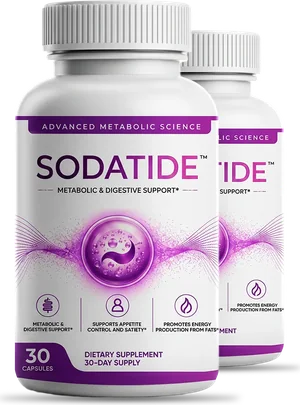
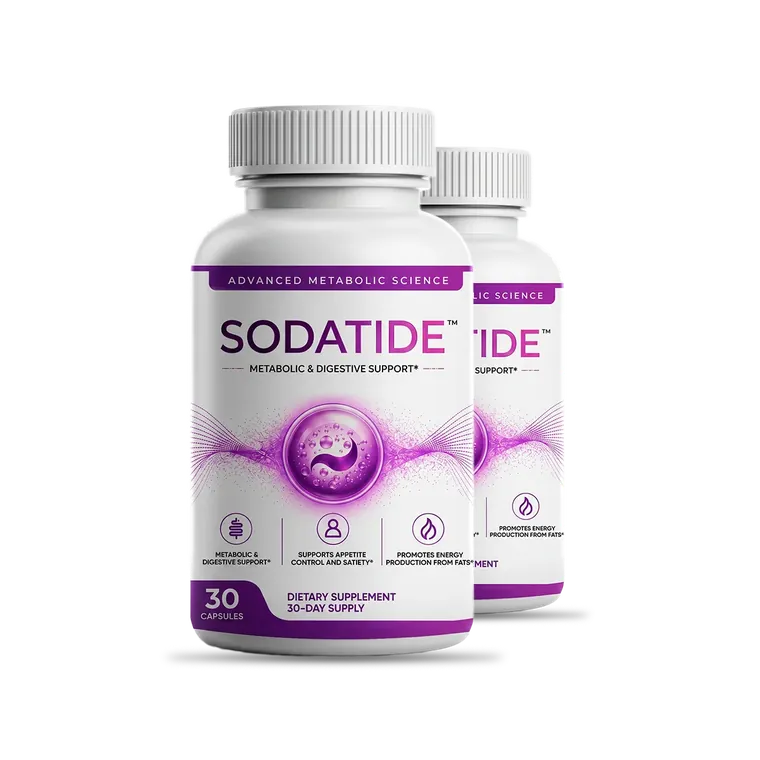
Each capsule holds 100 mg. The label prints it as potato resistant starch, from the tuber, second in the list after chicory root inulin.
100 mg is about 3% of 3.5 g, the lowest dose with a published effect on gut bacteria. It is about 1% of the 8 g low end in the metabolic trials. You would need dozens of capsules to match a study dose, and the label says never to exceed one a day.
So 100 mg is a real ingredient in a small amount. The idea of pairing it with inulin is sound, and our how Sodatide works page explains the feed-and-seed thinking. Whether this dose does anything has not been tested. Full details sit on the potato resistant starch page.
Before you buy
What should you check on a resistant starch product?
Look for four things on any label that sells resistant starch for gut health.
- The amount in grams per day, not only a blend weight
- The type, such as RS2 from potato
- Whether that product, at that dose, has been tested in people
- Who paid for the study, if there is one
Sodatide passes the first check in part: it prints 100 mg, a real number, but in milligrams. It names potato as the source. It has no study of its own. If fiber tends to bloat you, read why inulin causes bloating first; resistant starch trials did not report side effects, but inulin is the larger fiber in the capsule.
Have diabetes or take blood-sugar medicine? Keep your medicine as prescribed and talk to your doctor before adding any supplement.
Sources
Where do these resistant starch numbers come from?
The two key studies are listed below, each with a one-line summary.
- Consumption of Solnul Resistant Potato Starch Produces a Prebiotic Effect in a Randomized, Placebo-Controlled Clinical Trial. Bush JR, Baisley J, Harding SV, Alfa MJ. Nutrients, 2023.75 healthy adults, 3.5 g or 7 g/day resistant potato starch for 4 weeks; 3.5 g/day raised Bifidobacterium and Akkermansia vs placebo; "safe and well tolerated" at both doses. Funded by the starch maker.
- Metabolic Effects of Resistant Starch Type 2: A Systematic Literature Review and Meta-Analysis of Randomized Controlled Trials. Snelson M, et al. Nutrients, 2019.22 RCTs, 670 people, 8 to 66 g/day for 1 to 12 weeks: no significant change in fasting glucose, HOMA-IR or HbA1c; weight effect (-1.19 kg) driven by one high-risk-of-bias trial; "Short-term RS2 supplementation in humans is of limited cardiometabolic benefit." No side effects reported.
FAQ
Resistant starch questions people ask
What does resistant starch do for your gut?
It feeds gut bacteria. In one 4-week trial, 3.5 g a day of potato resistant starch raised Bifidobacterium and Akkermansia compared with placebo in 75 healthy adults. The starch maker funded that study.
Does resistant starch help you lose weight?
Not clearly. A review of 22 trials found a 1.19 kg drop, but one trial with a high risk of bias drove that result. The authors judged resistant starch type 2 to be of limited cardiometabolic benefit.
How much resistant starch is in Sodatide?
100 mg per capsule, listed on the label as potato resistant starch from the tuber. That is about 3% of the 3.5 g a day that raised gut bacteria in a published trial. Sodatide itself has not been studied.
Does resistant starch cause gas or bloating?
The 22-trial review did not report side effects at 8 to 66 g a day, and the 3.5 g and 7 g doses were well tolerated in another trial. Inulin, the other fiber in Sodatide, is the more common cause of gas.
Is potato starch the same as resistant starch?
Not always. Cooking changes starch. Raw potato starch is mostly resistant starch type 2, which is the form tested in the potato trial and named on supplement labels. Check the label for the words resistant starch.
Can I take resistant starch with diabetes medicine?
Ask your doctor first. The 22-trial review found no change in fasting glucose or HbA1c, so resistant starch is not a diabetes treatment. Never change or stop your medicine because of a supplement.
Who wrote this
Written and reviewed by
Plain-language pages built from the Sodatide label, the sales page and linked public health sources such as NIH, FDA and the FTC.
Last updated . See our editorial standards and how we check reviews. This website is run by Sodatideroutine, a USA authorized Sodatide retailer, not by the manufacturer. This site earns a commission when you buy through our order links.
Keep reading
More about Sodatide
Potato resistant starch
Sodatide's 100 mg of potato resistant starch, next to the 3.5 g that changed gut bacteria in a trial.
Read moreHow it works
The fiber-feeds-bacteria idea behind Sodatide, and why the dose decides whether it can matter.
Read more
Inulin and bloating
Why inulin causes gas, how many grams it takes, and what that means for a 211 mg capsule and for IBS.
Read moreUSA Authorized Sodatide Retailer
Ready to try Sodatide?
Pick a pack, read the label, and keep your order email. One capsule a day; every pack outlasts the first 30 days the guarantee asks for.
- Secure checkout
- 60-day money-back window
- Tracking in the order email