Guide
Gut Health Guide: Fiber, Bacteria and Where Sodatide Fits
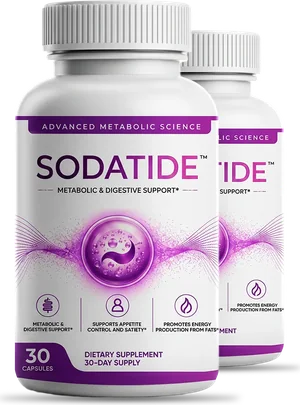
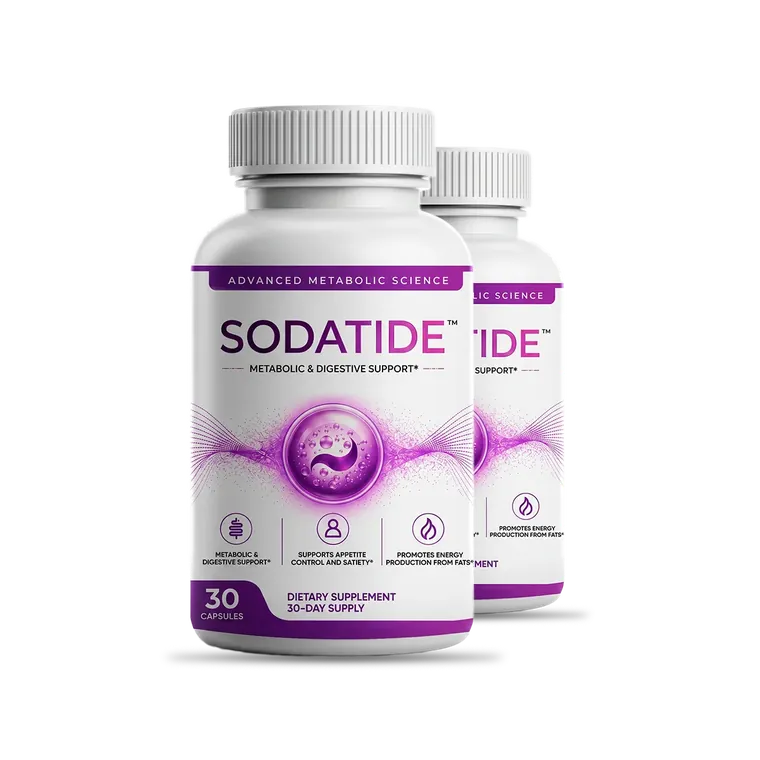
Good gut health rests on fiber from food, regular movement and steady sleep. Prebiotic fibers such as inulin feed gut bacteria, and studies gave them in grams a day. A Sodatide capsule holds 311 mg of fiber plus a probiotic blend with no live count, so it can only be a small extra on top of a fiber-rich diet.
Written by the Sodatide editorial teamUpdated
The basics
What does gut health actually mean?
For most healthy adults, gut health means regular, comfortable digestion and a varied community of bacteria in the large bowel.
Trillions of microbes live in your colon. They break down fiber your own body cannot digest. In return they make short-chain fatty acids, small molecules that the gut lining uses for fuel.
Real signs of a well-run gut are dull ones: steady bowel habits, little pain and no blood.
A prebiotic is food for good bacteria, usually a type of fiber. A probiotic is live bacteria you swallow. Sodatide holds a little of both.
Two words
What is the difference between a prebiotic and a probiotic?
A prebiotic feeds the bacteria already in you, while a probiotic adds new ones. They are judged in different units, which is why labels can be confusing.
| Prebiotic | Probiotic | |
|---|---|---|
| What it is | Fiber that reaches the colon undigested | Live microbes that may benefit the host |
| In Sodatide | Chicory root inulin 211 mg, potato resistant starch 100 mg | B. infantis, C. butyricum, A. muciniphila in one 36 mg blend |
| Unit that matters | Grams of fiber per day | Live count (CFU or cells) per day |
| Typical study amount | 3.5 to 10 g a day | 100 million to 10 billion a day, by strain |
| Found in food | Onions, garlic, oats, beans, cooled potatoes | Yogurt and other fermented foods with live cultures |
| Sodatide count | 311 mg total | Not published |
The FDA lists inulin among fibers it counts as dietary fiber (FDA, Dietary fiber Q&A). Probiotic amounts in studies come from the trials behind each strain (Whorwell 2006 (B. infantis 35624, IBS)) (Depommier 2019 (Akkermansia pilot)) and from NIH (NIH ODS, Probiotics (health professional)).
Dose check
How much prebiotic fiber did studies use?
Watch the bars fill: studies counted fiber in grams, while a capsule counts in milligrams.
Fiber doses come from the linked trials (Jackson 1999 (inulin 10 g/day)) (Bush 2023 (resistant potato starch)); probiotic doses from (Whorwell 2006 (B. infantis 35624, IBS)) (NIH ODS, Probiotics (health professional)) (Depommier 2019 (Akkermansia pilot)) (UK ACNFP 2024 (pasteurised Akkermansia)). Sodatide prints no CFU count, so it cannot be placed on the second chart. Its 36 mg blend is a weight, and weight says nothing about live count.
The gap is the main lesson of this guide. Inulin trials gave 5 to 10 g a day. The lowest dose of resistant potato starch with a measured change in gut bacteria was 3.5 g a day (Bush 2023 (resistant potato starch)). One Sodatide capsule gives 0.311 g of the two fibers combined. Read more on chicory root inulin and potato resistant starch.
Food first
Which foods feed your gut bacteria best?
Plants with fiber the body cannot break down on its own.
Ordinary plant foods carry far more fiber than any capsule, and they bring several fiber types at once.
Onions, garlic, leeks
These carry inulin-type fibers, the same family as chicory root. Cooked into soups and sauces, they add up over a day.
Oats and barley
A morning bowl of oats is one of the easiest fiber habits. Barley works well in soups and salads.
Beans and lentils
A half cup in a salad, a soup or a wrap gives you fiber and protein together, which helps you feel full.
Cooled potatoes and rice
Cooking and then chilling starchy foods turns part of the starch into a form that escapes digestion.
Go slow
How do you add fiber without bloating?
Add fiber in small steps over two to three weeks and drink water with it. Gas is the most common complaint when people raise fiber fast, with bloating close behind (Bonnema 2010 (inulin tolerance)).
Pick one change
Start with a single swap, such as oats at breakfast. Keep the rest of your meals the same for a week.
Add water
Fiber pulls water into the gut. A glass with each fiber-rich meal makes the change easier.
Wait a week
Some extra gas in the first days is common while gut bacteria adjust. If it settles, add the next food.
Watch your triggers
People with IBS may react to fructans, the family that includes inulin. If onions and garlic bother you, ask about a guided plan.
A symptom note on your phone beats guesswork. Our post on inulin and bloating has more detail.
Probiotics
Do probiotics help with weight or appetite?
Not by much, based on current reviews. Across 15 trials, people taking probiotics lost about 0.6 kg more than those on placebo, an effect the NIH calls of questionable clinical significance. The newest review of 19 trials found no effect on body weight or BMI (NIH ODS, Weight loss supplements).
Akkermansia gets the most attention online. One pilot study gave 32 adults 10 billion cells a day for three months. Insulin sensitivity improved with the pasteurized form, but the weight change was not significant (Depommier 2019 (Akkermansia pilot)). Our page on Akkermansia muciniphila covers that trial in detail.
Probiotic results also depend on the exact strain and the live count. A product that prints neither cannot borrow results from a study. The full reasoning is in our guide to choosing a probiotic.
Daily rhythm
What daily habits support a healthy gut?
- Before breakfast, about 7:30
The sales page suggests mornings before a meal. The label only says one capsule daily with 8 oz of water.
- Or before lunch
If mornings are rushed, lunch works too. One fixed time makes a missed day easy to spot.
- A walk after dinner
Ten or fifteen easy minutes after your biggest meal is a habit worth more than any capsule.
- Steady sleep
A regular bedtime makes it easier to tell real changes in appetite and digestion from a bad week.
Timing is a suggestion; follow the label. Food first: beans, oats, vegetables and fruit carry far more fiber than a 347 mg capsule (Liu 2017 (inulin meta-analysis)).
The habits with the strongest record are not exotic. In the Diabetes Prevention Program, adults who aimed for 7% weight loss and 150 minutes of activity a week cut their risk of type 2 diabetes by 58% (NIDDK Diabetes Prevention Program). Fiber-rich meals, walking and regular sleep were the tools, not a pill.
See a doctor
When is a gut problem more than a diet issue?
Some symptoms need a medical visit, not a new food or supplement.
- Blood in your stool or black, tarry stools
- Weight loss you did not plan
- Diarrhea that lasts more than a few days, or wakes you at night
- Severe or worsening belly pain
- A change in bowel habits that lasts for weeks
Honest fit
Where does Sodatide fit in a gut health plan?
Sodatide can be a small daily extra for a healthy adult who already eats fiber and wants a simple routine. It should not be the plan itself.
In its favor
- Two real prebiotic fibers, with amounts printed
- One capsule a day
- Vegetarian capsule, no stimulants listed
Keep in mind
- Fiber is 2-4% of study doses
- No live count or strain codes
- No study of the product
FAQ
Gut health guide FAQ
What is the best way to improve gut health naturally?
Eat more fiber from plants, add it slowly, drink water, move every day and keep a steady sleep schedule. These habits feed gut bacteria with grams of fiber a day. A capsule like Sodatide adds about a third of a gram, so it works best as a minor extra.
Is inulin a good prebiotic?
Yes, inulin is a well-studied prebiotic fiber, and the FDA counts it as dietary fiber. Studies gave 5 to 10 g a day and found modest effects, mainly on LDL cholesterol. Sodatide holds 211 mg per capsule, roughly 2% to 4% of those amounts.
Can a fiber supplement cause bloating?
Yes, fiber supplements can cause gas and bloating, especially when you add a lot at once. In one tolerance study, gas was the most common complaint at gram doses of inulin. Raise fiber slowly over a few weeks and drink water. The small amount in one Sodatide capsule is unlikely to cause much.
Do I need a probiotic if I eat fermented foods?
Most healthy adults do not need a probiotic supplement, though fermented foods with live cultures can be part of a varied diet. Probiotic benefits depend on the strain and the dose. If you have a specific symptom, ask your doctor whether a studied strain makes sense for you.
How long does it take to improve gut health with fiber?
Gut bacteria respond within weeks. In one trial, resistant potato starch at 3.5 g a day changed gut bacteria within 4 weeks. Comfortable digestion often takes two to three weeks of slow, steady change. Expect gradual shifts, not overnight results.
Is resistant starch good for your gut?
Resistant starch feeds gut bacteria and raised Bifidobacterium and Akkermansia at 3.5 g a day in one trial funded by the starch maker. A review of 22 trials found limited metabolic benefit at 8 to 66 g a day. Sodatide holds 100 mg per capsule.
Who wrote this
Written and reviewed by
Plain-language pages built from the Sodatide label, the sales page and linked public health sources such as NIH, FDA and the FTC.
Last updated . See our editorial standards and how we check reviews. This website is run by Sodatideroutine, a USA authorized Sodatide retailer, not by the manufacturer. This site earns a commission when you buy through our order links.
Keep reading
More about Sodatide
Choosing a probiotic
Strain codes, CFU counts, storage and safety: what to check on any probiotic label before you buy.
Read moreIngredients
All five Sodatide actives on one page, each set against the amounts research actually used.
Read moreSide effects
Gas, bloating and the rare serious risks of probiotics: who should skip Sodatide and when to stop.
Read moreUSA Authorized Sodatide Retailer
Ready to try Sodatide?
Pick a pack, read the label, and keep your order email. One capsule a day; every pack outlasts the first 30 days the guarantee asks for.
- Secure checkout
- 60-day money-back window
- Tracking in the order email