Ingredient 5 of 5
Clostridium Butyricum in Sodatide: What We Know and What Is Missing
Clostridium butyricum is a butyrate-making bacterium in Sodatide's 36 mg probiotic blend. The label names no strain and no CFU count. The best-known strain, MIYAIRI 588, has been sold in Japan since the 1960s at 300,000 to 135 million CFU a day (CBM 588 novel food application (UK)), and a small trial eased gut side effects of antibiotics (Shimbo 2005 (C. butyricum with H. pylori therapy)). No weight data exist.
Written by the Sodatide editorial teamUpdated
The basics
What is Clostridium butyricum?
Clostridium butyricum is a gut bacterium named for what it makes: butyrate. Butyrate is a short-chain fatty acid made when gut bacteria break down food.
In Japan, one strain has been sold as a probiotic since the 1960s (CBM 588 novel food application (UK)).
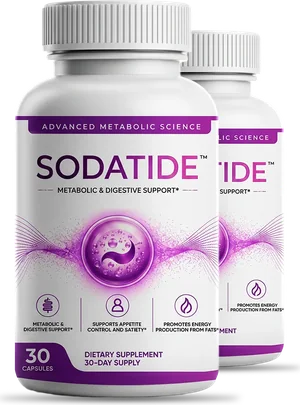
Sodatide lists it second in its probiotic blend, between B. infantis and Akkermansia. The profile below sets the label facts beside the research.
| Label name | Clostridium butyricum (in the 36 mg Probiotic Blend) |
|---|---|
| What it is | Clostridium butyricum · Butyrate-making bacterium |
| Position on the label | 5 of 5 (label order: inulin, resistant starch, then the probiotic blend; the blend lists its three strains without amounts) |
| Amount on the label | Not published (part of the 36 mg blend; no CFU count) |
| What research has used | 300,000 to 135 million CFU a day of strain MIYAIRI 588 (proposed adult intake) |
| Strength of evidence | Small trials alongside antibiotics; no weight data |
| What it is sold for | Makes butyrate; sold in Japan since the 1960s |
| Main caution | Sodatide does not name its strain, and strain matters for this species. |
Dose check
How much Clostridium butyricum does Sodatide contain?
The amount is not published. Three bacteria share one 36 mg blend, and the label gives no count for any of them. Weight does not tell you how many live cells a capsule holds (NIH ODS, Probiotics (health professional)).
| Detail | Sodatide label | MIYAIRI 588 research |
|---|---|---|
| Strain name | Not published | MIYAIRI 588 (also called CBM 588) |
| Daily amount | Not published (part of a 36 mg blend) | 300,000 to 135 million CFU, proposed adult intake |
| Years on sale | Not published | In Japan since the 1960s |
| Human trial cited here | None of Sodatide | 35 patients on antibiotics |
| Weight or appetite data | None | None |
The range for MIYAIRI 588 is wide: the top is 450 times the bottom. Even so, you cannot tell where Sodatide falls, or whether it uses that strain at all.
Strain matters
Why does the strain of Clostridium butyricum matter?
Because almost all of the human data come from one strain, and Sodatide does not say it uses that strain. Bacteria within one species can differ a lot. A strain code is what links a product to its research.
MIYAIRI 588 is made by a Japanese drug company. In its UK novel-food application, the company states it has been used "without adverse effects for close to 5 decades in Asian populations" (CBM 588 novel food application (UK)). That is the applicant's own claim, not a regulator's finding.
If Sodatide used MIYAIRI 588, you could compare its dose with the proposed range and read the trials. Without a name, the safety record and the studies belong to a strain that may not be in the bottle.
The study
Does Clostridium butyricum help during antibiotics?
One small trial suggests it may ease gut upset. In 2005, 35 people with ulcers took one week of triple antibiotic therapy against H. pylori (Shimbo 2005 (C. butyricum with H. pylori therapy)).
Those who also took MIYAIRI 588 had fewer belly symptoms than those on the drugs alone. Their gut bacteria were also less disrupted.
| People | 35 ulcer patients |
|---|---|
| Setting | One-week triple therapy for H. pylori |
| Strain | MIYAIRI 588 |
| Main finding | Fewer gut symptoms, less disruption of gut bacteria |
| What it did not test | Weight, appetite, metabolism or Sodatide |
Numbers side by side
How small are the doses in Sodatide?
Fiber doses come from the linked trials (Jackson 1999 (inulin 10 g/day)) (Bush 2023 (resistant potato starch)); probiotic doses from (Whorwell 2006 (B. infantis 35624, IBS)) (NIH ODS, Probiotics (health professional)) (Depommier 2019 (Akkermansia pilot)) (UK ACNFP 2024 (pasteurised Akkermansia)). Sodatide prints no CFU count, so it cannot be placed on the second chart. Its 36 mg blend is a weight, and weight says nothing about live count.
For scale: the full MIYAIRI 588 range, up to 0.135 billion CFU, would sit near the bottom of the probiotic chart.
The claim
Does Clostridium butyricum help with weight or metabolism?
No study has shown that it does on its own. The C. butyricum research we found is about gut comfort, not weight.
The closest thing is WBF-011, a formula with C. butyricum, four other strains and inulin, at 6 capsules a day. In 76 adults with type 2 diabetes it improved the rise in glucose after a meal, but A1c did not clearly change and body weight stayed the same (Perraudeau 2020 (WBF-011 trial)). Its authors were employees of the maker. Sodatide holds three of those five strains in one capsule, without counts, so the results do not transfer.
That matters when you read the front of the bottle. The label claims "Promotes Energy Production From Fats". Butyrate is a fatty acid made by bacteria, but no human study we found links this bacterium, at any dose, to burning more body fat. For lasting change, the proven route is habits: steady activity and modest weight loss cut type 2 diabetes risk by 58% in a large NIH program (NIDDK Diabetes Prevention Program).
Safety
Is Clostridium butyricum safe to take?
MIYAIRI 588 has a long sales record (CBM 588 novel food application (UK)). Since Sodatide's strain is unnamed, that record cannot be applied to it with certainty.
People who are seriously ill, in hospital, on chemotherapy, transplant drugs or high-dose steroids, or who have a central line face a rare risk of infection from live bacteria (NIH ODS, Probiotics (health professional)) (NCCIH, Probiotics). The same caution applies after recent bowel surgery.
NCCIH also notes that some probiotic products hold microbes not listed on the label (NCCIH, Probiotics). Our Sodatide side effects page explains which symptoms mean stop and get care.
Keep exploring
What should you ask the seller about Clostridium butyricum?
Is it MIYAIRI 588?
A yes connects the capsule to decades of sales data and a published trial.
How many CFU per capsule?
Then you can see where it falls in the 300,000 to 135 million range.
Is there a test report?
Ask whether a lab confirmed the strains and counts. The lot and CoA codes are seller references, not lab proof.
Call +1 (302) 200-3480 and note the answers with your order ID. The full label is typed out on the Supplement Facts page.
FAQ
Clostridium butyricum in Sodatide: questions people ask
How much Clostridium butyricum is in Sodatide?
The amount is not published. Clostridium butyricum is listed second in a 36 mg probiotic blend shared with B. infantis and Akkermansia, and the label prints no CFU count for any of them. The best-studied strain was proposed at 300,000 to 135 million CFU a day for adults.
What is Clostridium butyricum good for?
Its best-known use is gut comfort. In a small trial, 35 ulcer patients taking strain MIYAIRI 588 with antibiotic therapy had fewer gut symptoms than those on the drugs alone. It has no published weight or appetite data, and Sodatide does not name its strain.
Is Clostridium butyricum a bad bacteria?
No, not this species as a probiotic. One strain, MIYAIRI 588, has been sold in Japan since the 1960s, and its maker says it has a long record without adverse effects. Like any live probiotic, it carries a rare infection risk for very ill or immunocompromised people.
Which Clostridium butyricum strain does Sodatide use?
The label does not say. It names the species only, with no strain code. Most human research comes from MIYAIRI 588, so you can ask the order desk at +1 (302) 200-3480 whether that strain, or another, is in the capsule.
Does Clostridium butyricum burn fat?
There is no human evidence that it does. It makes butyrate, a fatty acid, but that is not the same as burning body fat. A five-strain formula with C. butyricum left body weight unchanged in adults with type 2 diabetes.
Can I take Clostridium butyricum with antibiotics?
Ask your doctor or pharmacist first. One small trial gave MIYAIRI 588 alongside antibiotics and saw fewer gut symptoms, but Sodatide's strain is unnamed. Antibiotics may also kill off live bacteria. Never skip or stop a prescribed antibiotic for a supplement.
Is Clostridium butyricum safe for daily use?
For healthy adults, probiotics are generally unlikely to cause harm, and the studied strain has decades of sales in Japan. Sodatide's own strain is not named, so that record may not apply. Stop and seek care for fever, severe belly pain or bloody stools.
Who wrote this
Written and reviewed by
Plain-language pages built from the Sodatide label, the sales page and linked public health sources such as NIH, FDA and the FTC.
Last updated . See our editorial standards and how we check reviews. This website is run by Sodatideroutine, a USA authorized Sodatide retailer, not by the manufacturer. This site earns a commission when you buy through our order links.
Keep reading
More about Sodatide

Ingredients
All five Sodatide actives on one page, each set against the amounts research actually used.
Read moreTesting & quality
What each Sodatide badge really means, why FDA registration is not approval, and which test papers to ask for.
Read moreWho should avoid probiotics
Weak immune systems, preterm babies, pregnancy, diabetes medicine and IBS: who should skip probiotics or ask first.
Read moreUSA Authorized Sodatide Retailer
Ready to try Sodatide?
Pick a pack, read the label, and keep your order email. One capsule a day; every pack outlasts the first 30 days the guarantee asks for.
- Secure checkout
- 60-day money-back window
- Tracking in the order email