Guide
How to Choose a Probiotic: A Label Checklist (Sodatide Included)
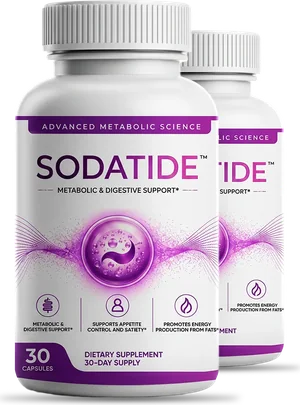
Choose a probiotic by its label, not its ads. Look for the full strain name with a code, a live count in CFU through the best-before date, clear storage directions and a study that used the same strain at a similar dose. Sodatide names three species but prints no strain codes and no CFU count, only a 36 mg blend weight.
Written by the Sodatide editorial teamUpdated
Short answer
How do you choose a good probiotic?
A good probiotic tells you exactly which bacteria it holds, how many are alive, and which study backs that exact strain.
Most shoppers pick by brand, price or a celebrity clip. A dietitian picks by the label. Five checks do most of the work:
- A strain code after the species name, such as 35624
- A live count in CFU, ideally stated "through the end of shelf life"
- Storage directions that make sense for live cells
- A published human study on that strain, at a similar daily dose
- A seller who answers questions and a refund policy you understand
A product can miss one check and still be fine for you. When it misses most of them, you are paying for a hope rather than a match with the research.
Names
What do genus, species and strain mean on a probiotic label?
Bacteria names have three layers, like a family name, a first name and an ID number. Research results belong to the ID number, the strain.
| Layer | Example | Why it matters | On the Sodatide label |
|---|---|---|---|
| Genus | Bifidobacterium | A large family with many different members | Printed |
| Species | Bifidobacterium infantis | Narrows it down, but members still differ | Printed for all three |
| Strain | B. infantis 35624 (Whorwell 2006 (B. infantis 35624, IBS)); C. butyricum MIYAIRI 588 (CBM 588 novel food application (UK)) | The level that studies actually test | Not published |
Two strains of the same species can behave very differently, so a study on one does not prove anything about another. Our ingredient pages on Bifidobacterium infantis and Clostridium butyricum show which strains were tested.
Live count
Why does the CFU count matter more than milligrams?
Fibers are dosed by weight. Bacteria are dosed by how many are alive.
CFU stands for colony-forming units, a count of cells able to grow. NIH notes that the weight of a probiotic on a label has no relationship with the number of live microorganisms in it, and that many products hold 1 to 10 billion CFU per dose (NIH ODS, Probiotics (health professional)). Sodatide's 36 mg could hold many cells or few; the label does not say.
U.S. rules allow this. A proprietary blend only has to show its total weight, not the amount of each ingredient inside (21 CFR 101.36 (proprietary blends)). Legal and useful are not the same thing, though, and a blank count makes study matching impossible.
Checklist
What should you check on any probiotic label?
Use the table in the store aisle or on a product page. The right column shows how Sodatide does, so you can see the method in action.
| Check | Good sign | Sodatide label |
|---|---|---|
| Species named | Full Latin names | Yes: B. infantis, C. butyricum, A. muciniphila |
| Strain codes | A code after each species | Not published |
| Live count | CFU per serving, through shelf life | Not published |
| Amount per strain | Listed one by one | No, one 36 mg blend |
| Live or pasteurized | Stated, if it matters for that strain | Not published |
| Storage | One clear instruction | Refrigerate, and also "cool, dry place" |
| Best-before date | Printed on the bottle | Not visible in any image we have |
| Study of the product | A human trial of that formula | None published |
For a slower walk through each line, read how to read a probiotic label.
Storage
Does a probiotic need to be refrigerated?
Some do and some do not; follow the bottle. Heat, light and moisture can reduce live cells over time, which is why many labels ask for the fridge.
The Sodatide label says "Refrigerate for optimal quality" and, further down, "Store in a cool, dry place." Both can be true at once: a tightly closed bottle in the fridge stays cool and dry. The sales page adds that refrigeration after opening preserves the probiotics.
Storage matters less for bacteria that are sold in a pasteurized, non-living form. In the Akkermansia pilot, the pasteurized form actually changed more markers than the live one (Depommier 2019 (Akkermansia pilot)). Sodatide does not say which form it uses, so the fridge is the sensible default.
Evidence
Does the study have to match the product?
Yes. U.S. advertising guidance asks whether the dose, formula and ingredient mix match what was studied (FTC Health Products Compliance Guidance). A look-alike formula with five strains and inulin, taken as six capsules a day, improved glucose response in adults with type 2 diabetes, but body weight did not change (Perraudeau 2020 (WBF-011 trial)). Sodatide shares three of those strains, in one capsule with no counts, so that result does not transfer.
Safety
Who should not take a probiotic without asking a doctor?
Probiotics are unlikely to harm healthy people, but the risk of serious infection is higher in people who are very ill or have a weak immune system (NIH ODS, Probiotics (health professional)) (NCCIH, Probiotics).
Weak immune system
Chemotherapy, transplant drugs, high-dose steroids, a central line or a hospital stay.
Pregnant, nursing or under 18
The Sodatide label itself points these groups to a physician before use.
Babies
The FDA warned that probiotics can cause fatal infections in preterm infants (FDA letter, probiotics in preterm infants).
NCCIH also notes that some probiotic products have been found to contain microbes not listed on the label (NCCIH, Probiotics). More on who should avoid probiotics.
Before you buy
What should you ask the seller before buying a probiotic?
Four questions sort serious sellers from vague ones. Ask them by email or phone and keep the answers.
Which strains, exactly?
Ask for the strain code of every species on the label.
How many live cells?
Ask for the CFU per capsule at the best-before date, not at the factory.
Live or pasteurized?
For Akkermansia in particular, the form changes what the research can tell you.
Where is the test report?
Ask whether an outside lab checked identity and count for your batch.
For Sodatide orders placed through this site, the order desk is +1 (302) 200-3480. None of the four answers is published as of October 11, 2026.
Applying it
How does Sodatide score on the probiotic checklist?
Sodatide scores well on clarity of species and on fiber, and poorly on everything a probiotic study needs. It names three real, studied species and prints real fiber amounts. It leaves out strain codes, live counts, per-strain amounts and live or pasteurized status.
That does not make it unsafe for a healthy adult. It means you cannot judge the probiotic part against any trial. If the bacteria are your main reason to buy, a product with codes and counts lets you compare. If you want a simple fiber-plus-bacteria routine and accept the gap, read the full panel on the Sodatide Supplement Facts page first.

FAQ
Choosing a probiotic FAQ
What should I look for when buying a probiotic?
Look for the full strain name with a code, a live count in CFU through the best-before date, clear storage directions and a human study on that strain. A product with all four lets you compare it with research. Missing items do not mean harm, but they leave you guessing.
How many CFU should a probiotic have?
It depends on the strain, because studies test specific doses. NIH says many products hold 1 to 10 billion CFU per dose. One B. infantis strain worked only at 100 million CFU a day in an IBS trial, while higher and lower doses did not beat placebo.
How many CFU are in Sodatide?
The CFU count of Sodatide is not published. The label lists a 36 mg probiotic blend of B. infantis, C. butyricum and A. muciniphila by weight only. Weight cannot be turned into a live count, so the blend cannot be compared with the doses used in studies.
Why do some probiotics not list strain codes?
U.S. rules require species names and, for a proprietary blend, only the total weight. Strain codes are optional, so some brands leave them off. Without a code you cannot tell whether a product holds the strain that was studied, since strains within a species can behave differently.
Are refrigerated probiotics better than shelf-stable ones?
Not always. Some strains are made to survive at room temperature, and others need cold storage to keep cells alive. Follow the label of the product you buy. For Sodatide, the label says refrigerate for optimal quality and also store in a cool, dry place.
Can probiotics be harmful?
For healthy adults, serious harm is rare, but NIH warns of infection risk in people who are severely ill or immunocompromised. The FDA has warned against probiotics for preterm infants. Mild gas or bloating can happen in the first days. Ask a doctor first if any risk group applies to you.
Who wrote this
Written and reviewed by
Plain-language pages built from the Sodatide label, the sales page and linked public health sources such as NIH, FDA and the FTC.
Last updated . See our editorial standards and how we check reviews. This website is run by Sodatideroutine, a USA authorized Sodatide retailer, not by the manufacturer. This site earns a commission when you buy through our order links.
Keep reading
More about Sodatide
Supplement Facts
The whole Sodatide label typed out word for word, with what each line tells you and what it leaves out.
Read moreGut health guide
How fiber and gut bacteria work, how much studies used, and how to add fiber without the bloat.
Read more
Who it's for
Who Sodatide suits, who should ask a doctor first, and a quick 5-question fit check.
Read moreUSA Authorized Sodatide Retailer
Ready to try Sodatide?
Pick a pack, read the label, and keep your order email. One capsule a day; every pack outlasts the first 30 days the guarantee asks for.
- Secure checkout
- 60-day money-back window
- Tracking in the order email