Evidence check
Akkermansia: What the Human Studies Really Show
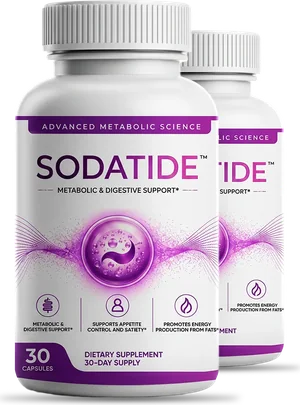
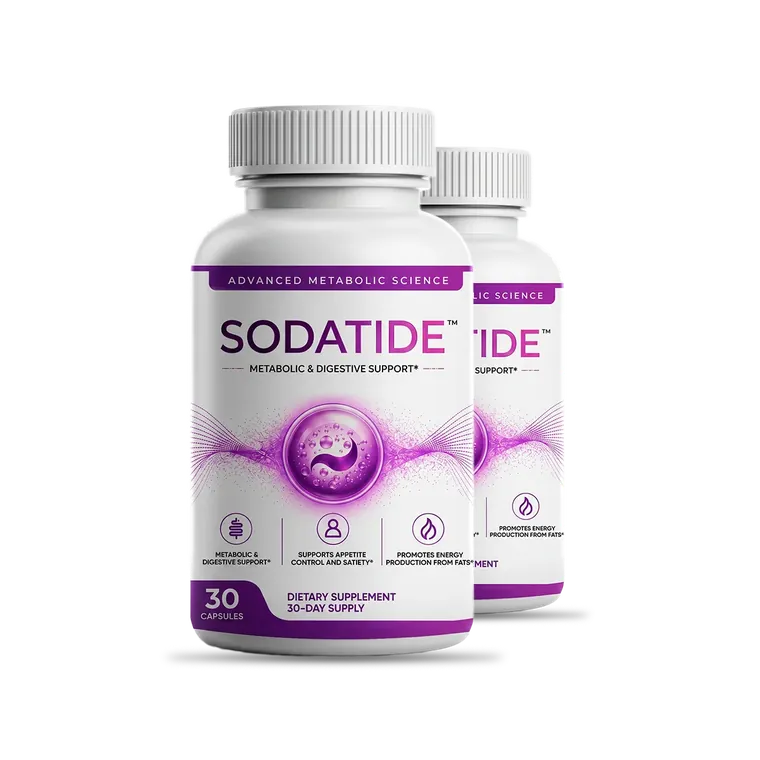
Akkermansia has one small human pilot behind most of the buzz: 32 overweight adults took 10 billion cells a day for 3 months. The pasteurized form improved insulin sensitivity, but weight change was not significant. Sodatide lists Akkermansia in a 36 mg blend with no cell count and no live or pasteurized status, so that trial cannot be applied to it.
Written by the Sodatide editorial teamUpdated · 9 min read
The basics
What is Akkermansia muciniphila?
Akkermansia muciniphila is a bacterium that lives in the human gut. Its name points to mucin, the main protein in the mucus lining of the gut, which it uses as food (Depommier 2019 (Akkermansia pilot)).
People with obesity and type 2 diabetes tend to carry less of it (Depommier 2019 (Akkermansia pilot)). That link is an observation, not proof of cause, but it is why scientists began testing it in people.
Online, it gets sold as a weight-loss shortcut. Let us be plain: a bacterium in a capsule is not a GLP-1 medicine, and Sodatide is not one either. The real question is what happened when people took it.
The key trial
What did the main Akkermansia study in people find?
The best-known human trial was small and careful. In 2019, researchers gave 32 overweight or obese adults with insulin resistance either a placebo, live Akkermansia or pasteurized Akkermansia for 3 months (Depommier 2019 (Akkermansia pilot)).
| Measure | Result with pasteurized Akkermansia | Was it significant? |
|---|---|---|
| Daily dose | 10 billion cells a day for 3 months | Not applicable |
| Insulin sensitivity | Improved by 28.62% vs placebo | Yes |
| Total cholesterol | Down 8.68% | Yes |
| Body weight | Down 2.27 kg | No |
| Safety | Safe and well tolerated | Not applicable |
| Live form | Changed less than the pasteurized form | Weaker results |
Read the weight line twice. In a group this small, a 2.27 kg drop could have been chance. The authors called it a proof-of-concept study: a first test to see if bigger trials make sense.
Doses, side by side
How much Akkermansia did studies use?
Probiotic doses are counted in cells, often billions a day. Watch the bars fill.
Fiber doses come from the linked trials (Jackson 1999 (inulin 10 g/day)) (Bush 2023 (resistant potato starch)); probiotic doses from (Whorwell 2006 (B. infantis 35624, IBS)) (NIH ODS, Probiotics (health professional)) (Depommier 2019 (Akkermansia pilot)) (UK ACNFP 2024 (pasteurised Akkermansia)). Sodatide prints no CFU count, so it cannot be placed on the second chart. Its 36 mg blend is a weight, and weight says nothing about live count.
The pilot used 10 billion cells a day. A UK food safety committee later discussed a proposed use of up to 50 billion pasteurized cells a day for healthy adults, with pregnant and nursing women left out (UK ACNFP 2024 (pasteurised Akkermansia)). That was a discussion paper, not a final safety ruling.
Sodatide sits off this chart on purpose. Its Akkermansia shares a 36 mg blend with two other bacteria, and NIH notes that weight has no relationship to the number of living microbes (NIH ODS, Probiotics (health professional)). The full breakdown lives on our Akkermansia ingredient page.
A detail that matters
Live or pasteurized Akkermansia: which one worked better?
In the pilot, the pasteurized form did better. Pasteurized means the bacteria were heat-treated, so they were no longer alive (Depommier 2019 (Akkermansia pilot)).
That surprises most people, who assume a probiotic must be alive to help. The UK proposal that followed was also for the pasteurized form (UK ACNFP 2024 (pasteurised Akkermansia)).
The label does not say whether its Akkermansia is live or pasteurized. It also gives no strain code. Without both, you cannot tell which version of the research, if any, it resembles. That is a fair question to put to the seller before you buy.
The look-alike formula
Does the WBF-011 diabetes trial apply to Sodatide?
No, not directly. WBF-011 is a different product that happens to share three bacteria with Sodatide. It was tested for 12 weeks in 76 adults with type 2 diabetes who stayed on their usual care (Perraudeau 2020 (WBF-011 trial)).
The differences are large. WBF-011 has five strains plus inulin, taken as six capsules a day with defined live counts. Sodatide has three of those species in one capsule with no counts. In the trial, glucose after a meal improved right at the line of significance (p=0.05). Long-term blood sugar (A1c) did not change significantly, and body weight stayed the same.
All of the trial's authors worked for, or held shares in, the company behind WBF-011. The FTC asks for evidence on the same ingredients, dose and formula (FTC Health Products Compliance Guidance). Sodatide has not been tested at all.
Probiotics and weight
Do probiotics help you lose weight?
NIH calls the 0.6 kg effect "of questionable clinical significance" (NIH ODS, Weight loss supplements). Compare that with the Diabetes Prevention Program, where modest weight loss plus 150 minutes of activity a week cut type 2 diabetes risk by 58% (NIDDK Diabetes Prevention Program).
Putting it to use
Should you take an Akkermansia supplement?
Think of a 44-year-old who saw an Akkermansia video and wants appetite help without injections. Her honest answer is a short list of questions.
- Does the label give a cell count per day, in billions?
- Does it say live or pasteurized?
- Does it name a strain code, not just the species?
- Has that product, at that dose, been tested in people?
For Sodatide, all four answers are "not published" or "no". That is not a sign of harm, but it makes any benefit a guess. Our guide on how to read a probiotic label walks through each check, and the Sodatide Supplement Facts show every printed line.
Pregnant or nursing, under 18, a weakened immune system, serious illness, or diabetes medicine. Live bacteria carry a rare infection risk in people who are very ill (NCCIH, Probiotics). Keep probiotics away from infants (FDA letter, probiotics in preterm infants), and never change a prescribed medicine because of a supplement. More on who should avoid probiotics.
Sources
Where do these Akkermansia numbers come from?
The three core sources are listed below. Every other link sits inline, next to the claim it supports.
- Supplementation with Akkermansia muciniphila in overweight and obese human volunteers: a proof-of-concept exploratory study. Depommier C, et al. Nature Medicine, 2019.32 overweight/obese insulin-resistant adults took 10^10 live or pasteurized bacteria/day for 3 months; pasteurized form improved insulin sensitivity by 28.62% (p=0.002) and cut total cholesterol 8.68%, but body weight change (-2.27 kg) was not significant (p=0.091); safe and well tolerated.
- Committee paper ACNFP/167/04: Pasteurised Akkermansia muciniphila (application RP1468). Advisory Committee on Novel Foods and Processes (UK Food Standards Agency), 2024.Proposed use of pasteurised A. muciniphila in food supplements "up to 5x10^10 cells/day in the healthy population", with pregnant or lactating women excluded. A discussion paper, not a final safety opinion.
- Dietary Supplements for Weight Loss: Fact Sheet for Health Professionals. NIH Office of Dietary Supplements, current page.A meta-analysis of 15 probiotic trials (957 people) found about 0.6 kg more weight loss than placebo, but "these effects were small and of questionable clinical significance"; the latest review (19 trials, 1,412 people) found no effect on body weight or BMI.
FAQ
Akkermansia questions people search
Does Akkermansia help you lose weight?
Not clearly. In the main pilot, 32 adults took 10 billion cells a day for 3 months. The pasteurized group lost 2.27 kg, but that change was not statistically significant. Insulin sensitivity and cholesterol did improve.
How much Akkermansia is in Sodatide?
The label does not say. Akkermansia sits inside a 36 mg blend with two other bacteria, and weight cannot be turned into a cell count. The pilot used 10 billion cells a day, so ask the seller for a CFU figure before you compare.
Is pasteurized Akkermansia better than live Akkermansia?
In the one pilot trial, yes. The heat-treated form improved insulin sensitivity by 28.62%, while the live form changed less. Sodatide does not say which form it uses, so ask before you buy.
Is Akkermansia the same as a GLP-1 drug?
No. Akkermansia is a gut bacterium sold in some supplements, while GLP-1 drugs are prescription medicines. Sodatide is a dietary supplement, not a GLP-1 medicine. For prescription weight treatment, talk with your doctor.
Is Akkermansia safe to take?
In the 3-month pilot, both forms were safe and well tolerated. Probiotics are unlikely to harm healthy people, but people who are very ill or have weak immune systems face a rare infection risk.
How long does Akkermansia take to work?
The pilot measured changes after 3 months of daily use, so short-term effects are unknown. No timeline exists for Sodatide, because the product has never been studied. Keep to the label's one capsule a day.
Who wrote this
Written and reviewed by
Plain-language pages built from the Sodatide label, the sales page and linked public health sources such as NIH, FDA and the FTC.
Last updated . See our editorial standards and how we check reviews. This website is run by Sodatideroutine, a USA authorized Sodatide retailer, not by the manufacturer. This site earns a commission when you buy through our order links.
Keep reading
More about Sodatide
Akkermansia muciniphila
The gut bacterium social media loves: what Sodatide's label shows, what the one pilot trial found, and what is missing.
Read moreSupplement Facts
The whole Sodatide label typed out word for word, with what each line tells you and what it leaves out.
Read moreHow to read a probiotic label
CFU, strain codes, blends and storage lines explained, with the Sodatide label read line by line.
Read moreUSA Authorized Sodatide Retailer
Ready to try Sodatide?
Pick a pack, read the label, and keep your order email. One capsule a day; every pack outlasts the first 30 days the guarantee asks for.
- Secure checkout
- 60-day money-back window
- Tracking in the order email